
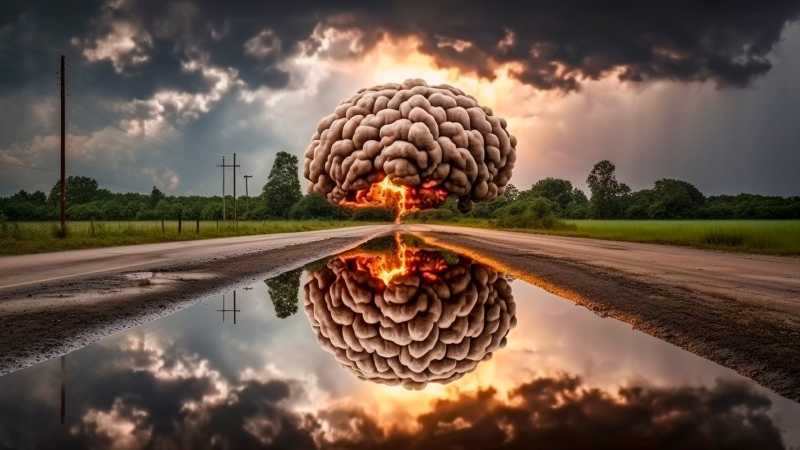
The mind is its own place, and in itself can make a heaven of hell, a hell of heaven. That which does not kill us makes us stronger. The past is never dead. It’s not even past.
The human mind has extraordinary power over the way people experience life. Two people can face similar circumstances yet respond to them in completely different ways. One may see an obstacle as the end of the road, while another may see it as an opportunity to learn and grow. This difference often comes from perspective, attitude, and the way the mind interprets experience.
The Mind Shapes Our Experience
The mind does not simply observe the world; it constantly gives meaning to what happens. A difficult situation can create fear and uncertainty, but it can also encourage determination. A small success can feel insignificant to one person and deeply meaningful to another.
This does not mean that people can simply think away every problem. Real difficulties require practical solutions, support, patience, and sometimes major changes. However, the way a person thinks about a challenge can influence how effectively they respond to it.
A hopeful perspective can help someone recognize possibilities that may otherwise remain hidden. When people believe that improvement is possible, they are often more willing to learn, ask for help, and take constructive steps forward.
Turning Challenges Into Strength
Difficult experiences can leave important lessons behind. Failure, disappointment, and unexpected changes may be painful, but they can also develop qualities such as patience, resilience, and adaptability.
Becoming stronger does not mean becoming unaffected by difficulties. Strength can simply mean learning how to respond more wisely after facing a challenge. Someone who has experienced failure may become better prepared for future opportunities. Someone who has faced uncertainty may develop greater patience with others who are struggling.
Growth often happens gradually. A difficult experience may not immediately reveal its lesson. Sometimes its meaning becomes clearer only after time has passed and a person has gained enough distance to reflect on what happened.
The Influence of the Past
The past remains an important part of human life because previous experiences influence present decisions. Childhood memories, relationships, successes, mistakes, and major changes can all shape expectations about the future.
However, remembering the past does not mean remaining trapped in it. Reflection can be useful when it helps people understand their choices and learn from previous experiences.
People can ask themselves important questions: What did this experience teach me? What would I do differently today? Which lessons should I carry forward? These questions can turn memories into sources of wisdom.
Learning Without Living in Yesterday
There is a difference between learning from the past and constantly living in it. Looking backward can provide valuable perspective, but excessive focus on old events can make it harder to appreciate the present.
The past cannot be changed, but its lessons can influence future choices. A mistake can become a warning. A success can provide confidence. A difficult relationship can teach someone about communication and boundaries.
When people accept that the past is part of their story rather than the whole story, they can begin to focus more clearly on what comes next.
Choosing a Constructive Perspective
A constructive mindset does not require constant positivity. People naturally experience sadness, frustration, disappointment, and uncertainty. Pretending otherwise can prevent honest reflection.
Instead, a constructive perspective means recognizing difficulties while searching for practical ways to respond. It means asking what can be learned, what can be improved, and what step can be taken next. Studying consistently, improving communication, organizing priorities, developing useful skills, or spending time with supportive people can gradually change the direction of life.
Finding Balance Between Memory and Hope
A balanced approach to life allows people to respect the past while remaining open to the future. Memories can provide identity and wisdom, but they should not prevent new experiences.
Hope is important because it creates a sense of possibility. Even when circumstances are difficult, the future contains opportunities that cannot always be seen from the present moment.
The ability to imagine something better can encourage people to keep learning and moving forward. Hope does not guarantee a perfect outcome, but it can provide motivation to continue making thoughtful choices.
Conclusion
The mind has an important influence on how people understand their experiences. While thoughts alone cannot remove every challenge, a thoughtful perspective can help individuals respond to difficulties with greater patience and resilience.
The past also carries valuable lessons. It may contain mistakes, disappointments, achievements, and memories, but none of these experiences has to define the entire future. What matters is what people learn from them and how they use that knowledge moving forward.
Life becomes more meaningful when people recognize both the power and the limits of their minds. By learning from yesterday, responding wisely to today’s challenges, and remaining open to tomorrow’s possibilities, people can transform difficult experiences into opportunities for growth and build a stronger sense of purpose for the future.