
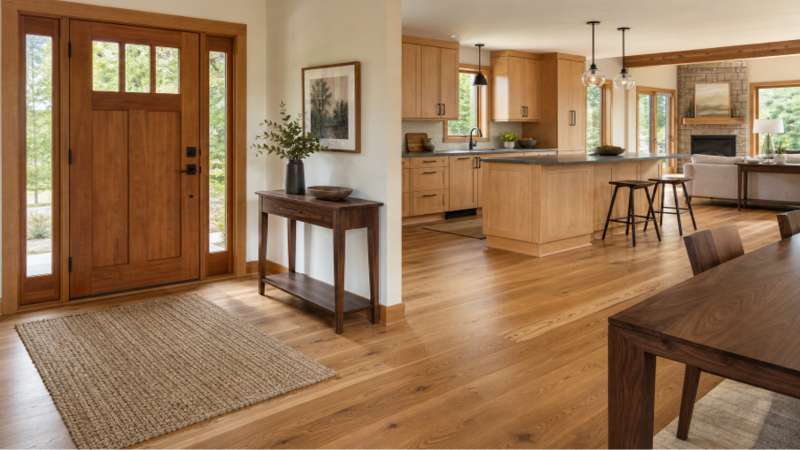
Wood is more than a background material. It influences a room’s color, texture, perceived warmth, and ability to withstand normal household activity. Learning how different species behave helps homeowners choose materials with greater confidence, especially when selecting alder wood for doors, cabinetry, trim, or furniture.
The best choice depends on where and how the finished piece will be used. A bedroom door may need a calm, inviting appearance and only modest dent resistance. A kitchen island, mudroom bench, or entry door is subject to much more contact, moisture, and impact. Price and popularity matter, but neither should be the only deciding factor.
Lighting also changes the way wood appears. A warm indoor bulb can bring out golden or red undertones, while daylight may reveal gray, tan, or cooler notes that were not obvious in a showroom. Grain can look quieter from across a room and much bolder at arm’s length, particularly after a stain or glossy topcoat is applied.
How Common Wood Species Compare
There is no universally best wood species. Instead, compare the appearance and practical strengths of each option against the project at hand.
- Alder: Usually warm, smooth, and relatively understated. It is a flexible choice for interior doors, cabinetry, furniture, and millwork when a softer grain pattern is preferred.
- Oak: Known for pronounced grain and strong visual movement. It can suit flooring, tables, and traditional or transitional spaces that benefit from texture.
- Maple: Often light, clean, and fine-grained. It works well in contemporary rooms, especially when a clear finish or paint is part of the plan.
- Walnut: Naturally dark and dramatic, with a refined appearance. It is often selected for statement furniture, accents, and spaces that call for rich contrast.
Where Alder Fits In
Alder works well when a project needs warmth without the heavy visual pattern associated with oak. Clear alder generally has a more even, streamlined appearance, while knotty alder includes visible knots and character marks that support rustic, farmhouse, lodge, or casual interiors.
Because it machines and finishes well, alder is commonly used for doors, cabinets, trim, shelving, and furniture. Red alder is native to the Pacific Coast region, and its geographic range extends from southeastern Alaska to southern California. For residential projects, its main limitation is that the surface is softer than some hardwood alternatives, so dents can become part of its lived-in character over time.
Hardness and Daily Wear
Hardness is useful because it indicates how readily a wood surface may dent or scratch, but it is not a complete measure of quality. A well-built alder cabinet can be an excellent long-term choice, while a poorly constructed hardwood piece may still fail early at joints, edges, or hardware.
Consider the amount of repeated contact. Low-contact trim, bedroom furniture, and interior doors can accommodate many species. Kitchen cabinets near handles, hallway benches, dining tables, and mudroom storage need more tolerance for bumps, friction, and fast cleanup. In active homes, a satin or matte finish can make minor marks less noticeable than a high-gloss surface.
Matching Finish to Wood
- Start with the room’s mood. Light natural finishes can feel airy and modern, while deeper stains often create warmth, contrast, and formality.
- Study the grain before selecting color. Bold-grained woods can handle transparent stains well, while fine-grained woods may look best with a clear finish or paint.
- Expect color shift. Some clear coats add amber warmth, while other finishes preserve a more natural, raw-wood appearance.
- Choose sheen carefully. Matte hides glare and small imperfections; satin offers a practical middle ground; and gloss creates stronger reflections but can reveal scratches.
- Test for uneven absorption. Certain woods may blotch with stain, so use the planned conditioner, stain, sealer, and topcoat on a real sample.
How to Test Wood and Finish Samples
Use a sample made from the same species and grade specified for the finished project. Apply the entire finish schedule, not only a stain. Then view it in morning daylight, afternoon light, and the room’s evening lighting. Place it next to flooring, paint, countertops, hardware, and nearby upholstery.
Look at the sample from several feet away and up close. A finish that seems attractive in isolation may compete with the surrounding materials once installed. Keep the sample in the room for several days before approving a color, particularly for large cabinet, door, or wall-panel orders.
Style Choices
Warm wood tones, visible texture, and more personal combinations of finishes continue to shape home projects. Current kitchen cabinet design directions emphasize warmer timber finishes and layered spaces rather than overly uniform rooms.
That does not mean every wood surface must match. A quieter alder door can balance oak flooring, textured stone, dark metal hardware, or a walnut accent piece. The goal is coordination through undertones and overall mood, not an exact species-for-species match throughout the home.
Care and Maintenance
Finished wood benefits from simple, consistent care. Dust with a soft cloth, clean up spills promptly, and avoid harsh abrasives or soaking-wet rags. Direct sunlight can gradually change wood color, while moisture can affect joints, edges, and finishes if it is allowed to sit.
Follow the finish manufacturer’s cleaning guidance, especially for painted, stained, or conversion-varnish surfaces. Small scuffs may be suitable for a touch-up product, but widespread wear, peeling, or water damage may call for professional refinishing.
Common Questions
Is Alder a good choice for busy areas?
It can be, especially for cabinets and doors in typical residential use. In very high-contact zones, expect alder to show dents sooner than harder woods and choose a forgiving finish.
Do all wood species take stain the same way?
No. The same stain can appear light, dark, even, blotchy, subtle, or high-contrast depending on the species, grain, and preparation method.
Should doors and cabinets use the same wood?
Matching creates a calm, connected look, but mixing species can add depth when the undertones, finish sheen, and hardware work together.
Final Selection Checklist
- Does the wood suit the level of daily contact?
- Does its grain fit the room’s style?
- Has the complete finish been tested on the actual species?
- Does the sample work with floors, walls, counters, and furniture?
- Will the surface be realistic to clean and maintain?
- Does the final combination feel current without relying on a short-lived trend?
Conclusion
Choosing wood becomes easier when appearance, function, finish, and maintenance are considered together. Alder, oak, maple, and walnut can all be excellent choices in the right setting. Select the material that suits the room’s style, handles its expected workload, and still feels right after years of everyday use.