
High-density biopharmaceutical fermentation and mammalian cell perfusion cultures operate under rigorous physiological constraints. Maintaining optimal cell viability, target protein expression, and post-translational glycosylation profiles requires precise, continuous oxygen delivery into the liquid culture medium.
However, aerobic bioprocesses face severe oxygen transfer limitations. Oxygen possesses low solubility in aqueous nutrient broths, requiring continuous gas sparging to satisfy cellular oxygen uptake rates (OUR).
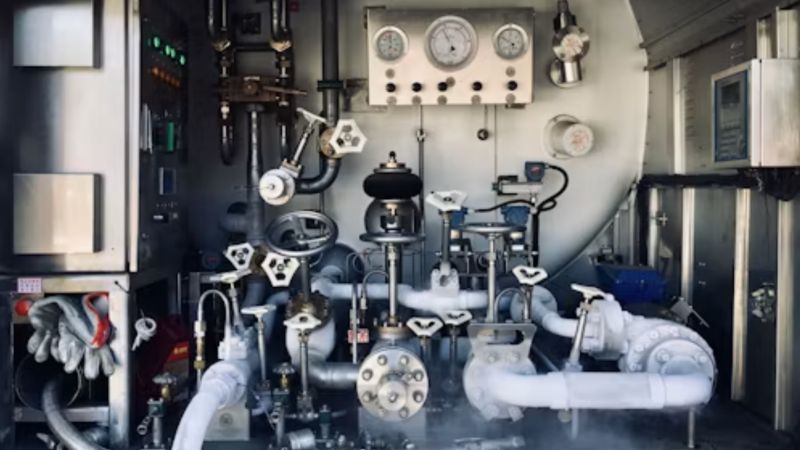
Historically, biopharmaceutical manufacturing facilities relied on bulk cryogenic liquid oxygen (LOX) storage or manifolded high-pressure gas cylinders. Yet, cryogenic supply chains suffer transport delays, volatile evaporation boil-off losses, and significant logistics overhead.
To overcome these constraints, bioprocess engineers are integrating automated on-site pressure swing adsorption (PSA) and vacuum pressure swing adsorption (VPSA) systems capable of generating medical-grade oxygen directly at the point of use.
Physical Chemistry of Oxygen Enrichment: Lithium Exchange and Selectivity
The Quadrupole Interaction Mechanics of LiX Zeolites
In high-density bioprocessing where sparge gas demands are continuous, the physical efficiency of the adsorbent bed dictates both skid size and energy overhead. According to empirical performance data from molecular sieve specialist Jalon, modern lithium-exchanged low-silica X (LiX) zeolites demonstrate an exceptional nitrogen-to-oxygen separation factor exceeding 3.0, coupled with rapid mass-transfer kinetics. This electrostatic affinity allows biopharmaceutical oxygen concentrators to extract high-purity medical oxygen from ambient air with significantly smaller bed volumes and lower compressor discharge pressures than legacy sodium-based zeolites.
The fundamental driving force behind point-of-use air fractionation lies in electrostatic field gradients within crystalline aluminosilicate frameworks:
- Quadrupole Adsorption Mechanism: Atmospheric nitrogen (N₂) has a permanent quadrupole moment approximately three times greater than that of nonpolar oxygen.
- Extra-Framework Cation Density: In low-silica faujasite frameworks, highly electropositive cations occupy designated crystallographic sites , projecting intense localized electric field gradients into the internal zeolitic supercages.
- Selective Polar Binding: The localized charge distribution induces a dipole in incoming nitrogen molecules, allowing the aluminosilicate matrix to selectively adsorb nitrogen while oxygen passes through as the product gas.
Adsorption Isotherms and Bed Volumetric Efficiency
Replacing conventional sodium 13X zeolites with lithium-exchanged LSX zeolites fundamentally transforms adsorption isotherm performance. Under standard operational pressures (1.5 to 3.0 bar absolute), LiX zeolites exhibit a dramatically steeper nitrogen uptake isotherm:
- High Working Capacity: LiX achieves up to three times greater dynamic nitrogen adsorption capacity ( delta loading) per cycle than sodium-based alternatives.
- Footprint Reduction: Generator bed volumes can be reduced by 50% to 60%, enabling compact skid integration directly inside cleanroom mechanical interstitial spaces.
- Compressor Energy Conservation: Operating at lower adsorption pressures significantly reduces compressor kilowatt draw per normal cubic meter of enriched oxygen, lowering facility operational expenditures.
Eliminating Critical Impurities: Clean Gas Delivery in Sterile Fermentation
Hydrocarbon and Particulate Filtration Post-Adsorbent Bed
Direct gas sparging into closed bioreactor vessels requires absolute chemical and particulate purity. Any trace oil aerosols, desiccant fines, or airborne particulates entering the fluid broth can alter surface tension, impede mass transfer, or corrupt sterile regulatory validation.
Modern bioprocess PSA systems implement strict multi-stage barrier filtration downstream of adsorbent columns:
- Submicron Particle Filtration: Dual-stage sintered stainless steel mesh filters, rated at 0.01 microns, capture zeolite dust particles produced during pressure cycling.
- Activated Carbon Polishing: Catalytic carbon filter beds capture trace ambient hydrocarbons, volatile organic compounds, and compressor vapor carryover.
- Integrity-Tested Hydrophobic Membrane Filters: Final point-of-entry 0.22-micron PTFE sterilizing-grade gas filters guarantee total biological barrier integrity, preventing microbial ingress into the bioreactor head-plate.
Moisture Dew Point Suppression to Inhibit Microbial Growth in Gas Headers
Compressed air fed into the PSA separation array must undergo deep cryogenic or desiccant drying. Maintaining gas stream moisture dew points below is vital:
- Preventing Header Condensation: Low dew points eliminate moisture pooling inside long stainless-steel distribution lines routed through temperature-controlled cleanroom suites.
- Preventing Biofilm Formation: Removing liquid water eliminates a key condition that supports opportunistic bacterial growth within gas delivery headers.
- Safeguarding Zeolite Integrity: Prevents water vapor from poisoning the lithium adsorption sites within the main fractionation columns.
Sizing PSA vs. VPSA Gas Plant Architecture for Biomanufacturing Suites
Dynamic Cycle Time Optimization in Fast-Cycle PSA (VPSA)
Matching oxygen generation to variable cellular consumption curves requires dynamic cycle control. During exponential growth phases, bioreactor oxygen uptake rates spike rapidly, demanding instantaneous sparge adjustments without pressure fluctuations.
Fast-cycle vacuum pressure swing adsorption (VPSA) units balance continuous purity across four coordinated phases:
- Adsorption Stage: Feed air flows through the bed at an absolute pressure of 1.2–1.8 bar, generating the desired output.
- Equalization Step: Depressurizing beds transfer high-pressure oxygen-rich void gas to freshly regenerated columns, conserving up to 30% of system compression energy.
- Vacuum Desorption: An oil-free roots blower evacuates the saturated bed down to 0.4 bar absolute, stripping captured nitrogen rapidly.
- Product Oxygen Purge: A fraction of dry product oxygen flushes counter-currently through the column, completing cation site regeneration.
Mitigating Sound and Vibration in Cleanroom Environments
Biopharmaceutical cleanroom suites house sensitive analytical instruments, such as micro-balances, mass spectrometers, and peristaltic perfusion pumps, that are highly vulnerable to mechanical vibration and acoustic noise.
Modern bioprocess oxygen generators incorporate comprehensive mechanical isolation:
- Rotary Tooth and Scroll Compressors: Oil-free, dynamic-balanced compressors replace noisy reciprocating pistons, lowering base operational noise below 60 dBA.
- Elastomeric Vibration Mounts: High-deflection internal dampeners decouple the compressor chassis from the external skid frame, preventing vibration transmission into cleanroom raised floors.
- Internal Acoustic Silencing: Sound-attenuating acoustic baffles and resonant exhaust mufflers dampen high-velocity pressure discharge cycles.
Regulatory Validation and Pharmacopeia Gas Standards
Compliance with United States and European Pharmacopeia Monograph for Oxygen 93 Percent
To ensure that oxygen produced via pressure swing separation is safe for sensitive cellular cultures and direct therapeutic applications, the output gas stream must strictly align with pharmacopeial monographs. In standard medical and laboratory gas distribution, modern on-site oxygen concentrator arrays must incorporate continuous paramagnetic analysis and multi-tier HEPA filtration to ensure chemical purity and eliminate particulate risks before delivery into critical environments.
The United States Pharmacopeia (USP) and European Pharmacopoeia (Ph. Eur.) establish rigorous chemical boundaries for on-site generated gas:
- Oxygen Purity Range: Verified continuously between (with residual gas consisting of inert atmospheric argon and trace nitrogen).
- Carbon Monoxide (): Restricted to less than .
- Carbon Dioxide (): Maintained below .
- Moisture (): Limited to less than .
Validation Protocols for Automated Closed-Loop Bioreactor Sparge Systems
On-site oxygen plants interface directly with bioreactor distributed control systems (DCS). Mass flow controllers (MFC) modulate enriched oxygen delivery based on real-time feedback from optical dissolved oxygen (DO) sensor patches, automatically preventing cellular hypoxia or toxic oxidative stress across high-density perfusion cultures.
Key Takeaways
| Area | Key Takeaway | Impact/Data |
| Supply Chain | Replace bulk cryogenic LOX tankers | 0 boil-off losses; zero delivery delays |
| Sieve Tech | Deploy lithium-exchanged (LiX) zeolites | >3.0 N2/O2 selectivity; 3x N2 capacity |
| Footprint | Shrink adsorption vessel sizing | Reduces skid volume by 50%–60% |
| Energy Load | Recover depressurization void gas | Cuts compression energy by 30% |
| Gas Barrier | Integrate multi-tier sterile filtration | Traps dust to 0.01 μm; 0.22 μm PTFE finish |
| Acoustics | Isolate rotary tooth/scroll compressors | Suppresses noise to <60 dBA |
| Compliance | Align with USP/Ph. Eur. Monographs | Delivers 90%–96% O2; CO <5 ppm |
Conclusion
Transitioning biopharmaceutical manufacturing suites from bulk cryogenic liquid deliveries to on-site oxygen generation represents a major advance in process resilience, sustainability, and quality control.
By utilizing high-selectivity lithium-exchanged molecular sieves, bioprocess engineers can generate on-demand, pharmacopeia-compliant oxygen with minimized energy footprints, rock-solid purity, and total operational independence.