
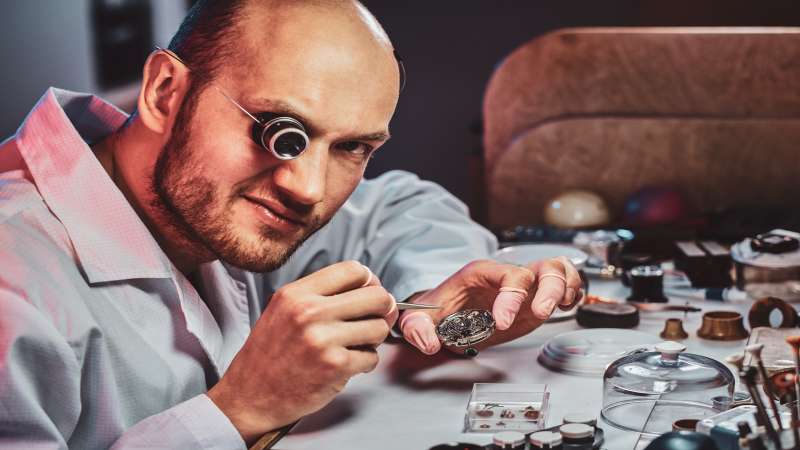
Antique clocks often fall silent for reasons that seem small at first. A missing hand, gear, pin, strike component, or motion part can stop the entire mechanism and leave a valuable heirloom sitting still for years. Families may still have the case, dial, story, and memory attached to the object, yet the clock no longer functions because one crucial element is gone. That is why custom replacement parts matter so much. They create a path between preservation and function, allowing damaged clocks to remain part of family life instead of becoming silent decorations that slowly lose their meaning over time.
Restoring missing pieces
- One missing part can turn off an entire movement.
An antique clock is a chain of dependent actions, and that means one missing component can disable far more than the small part itself. A lost gear tooth, absent hand collet, missing pendulum fitting, or broken strike lever may stop timing, motion, or chime control altogether. To an untrained eye, the clock can look nearly complete, which is why many families assume it is only waiting for a simple repair that never seems to happen. In reality, the missing part prevents the movement from executing its sequence properly, and the longer the clock remains incomplete, the more likely dust, stiffness, and neglect will cause secondary problems. Custom replacement parts matter because they turn the issue from final loss into a workable restoration challenge, allowing the original movement to be understood as interrupted rather than finished. That shift in perspective is important because it encourages preservation rather than abandonment and keeps the restoration conversation focused on possibility rather than defeat.
- Custom replacement parts make restoration possible when originals no longer exist.
Many antique clocks were made in limited numbers, altered during earlier repairs, or built with dimensions that do not match modern generic components. Even salvaged parts from another clock may come close in appearance while still failing in thickness, diameter, spacing, or mechanical purpose. In workshops where Dutch Timepieces is part of the conversation, the deeper goal is often preserving the clock’s identity while restoring its ability to run. A carefully made replacement part allows the movement to regain function without forcing an ill-fitting substitute that introduces friction, misalignment, or extra strain into a system already carrying decades of history. It also gives families a realistic path forward when searching endlessly for an original part would only leave the clock silent for years longer.
- Recreated parts help preserve more of the original clock.
Another important reason custom replacement parts matter is that they often allow the rest of the antique clock to remain intact. When a missing component is thoughtfully filled, there is less pressure to replace larger sections of the movement or to alter the case simply to make the clock run again. That matters because families and collectors usually want to keep as much of the original object as possible. The goal is not to turn an antique clock into a modern imitation. It is to support the old movement with the least disruptive intervention that still restores function. A properly made replacement part can do exactly that. Instead of forcing a crude workaround, it helps the clock continue as itself. This kind of restoration respects the historical material already present while giving the movement what it needs to operate again more naturally and coherently over time.
- Fit matters as much as function.
Fit matters just as much as function. A replacement part cannot merely occupy space inside the movement. It must meet neighboring components at the right angle, depth, and tolerance so the clock can run with steadier motion and less internal stress. When the fit is wrong, the repair may appear complete while quietly creating drag, uneven wear, or timing trouble. Custom work matters because it reduces that risk and gives the clock a more natural mechanical relationship between old parts and newly made ones. That precision often determines whether the restoration feels temporary or truly lasting over time in use.
- Working clocks are easier to keep in family life.e
Working antique clocks are also easier for families to value and pass down. A silent heirloom may still look beautiful on a shelf, but once it no longer ticks, chimes, or marks the hour, younger relatives may begin seeing it as a fragile decoration instead of a living part of family history. Custom replacement parts help restore use, and use keeps memory active. When a clock runs again, people wind it, hear it, ask about it, and connect it to the relatives who once depended on it in their everyday lives. That change matters because heirlooms survive more strongly when they remain part of household routine rather than becoming untouchable objects admired from a distance. A recreated part, therefore, repairs more than brass or steel. It helps restore a rhythm of family attention, making the clock easier to appreciate, explain, and hand forward with meaning still attached. In many homes, that renewed function is what keeps the heirloom emotionally present instead of gradually forgotten.
Saving one piece can save the whole heirloom.
Custom replacement parts help save antique clocks with missing components by turning absence into possibility. A clock may lose one piece and still keep nearly all of its structure, beauty, and family meaning, yet without the right par,t it can remain silent for generations. Recreating what is missing gives the movement a chance to work again while preserving more of the original object. That matters for families who want heirlooms to remain alive in the home rather than frozen in storage. When thoughtful restoration fills the missing gap, time begins moving again, and the story continues forward for generations.