
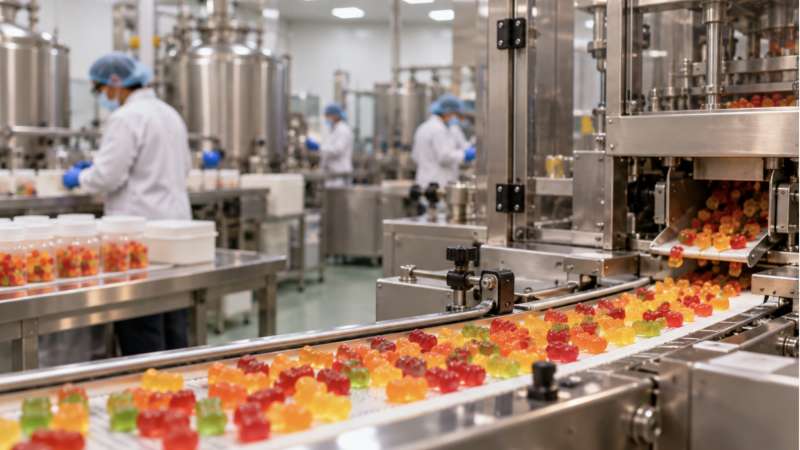
Vitamin gummies have become extremely popular in the last few years. Office goers and seniors to kids, every other person is consuming vitamin gummies as a regular part of their diet now. Projections show the global supplement and vitamin market could reach over $40 billion by 2031.
The rising fitness culture & affordability of blood testing have made people aware of the lack of nutrition in their standard food. That’s why vitamin gummies have become a go-to choice; they are not only tastier than regular vitamin pills but also easy to consume regularly without falling out of habit.
But how exactly are vitamin gummies made? That’s a thought that fascinates quite a large number of consumers. Let’s decode the process of how your favorite gummy vitamin manufacturer works to create these delicious and fun-looking healthy candies.
What are the main ingredients that go into making vitamin gummies?
Turn the back of any vitamin gummy bottle, and you’ll notice a list of ingredients that is common across brands. These are the base materials that give gummies their shape, size, color & texture. Let’s take a look at them in detail:
Gelatin/Pectin
Gummies are either made from gelatin or pectin. It gives gummies its chewy texture and shape. Gelatin is a color- and flavorless protein that is extracted from animal collagen, whereas pectin is a water-soluble natural fiber usually derived from fruit or plant matter.
In earlier days, almost all gummies sold were made from gelatin; however, with the rise of vegan culture, most of the brands have now started shifting to pectin. Still, if you are vegan or vegetarian, do check the back of the label, as some traditional and popular brands still use gelatin in certain offerings.
Sweeteners
The biggest appeal of vitamin gummies over pills and capsules is their taste and flavoring options. With consumer focus shifting to healthy alternatives, most brands have started using non-caloric or low-sugar options like agave syrup, honey, tapioca or stevia, and monk fruit instead of direct sugar.
These low-cal options make gummies even healthier without compromising on the taste. Still, do not eat more than prescribed just because it tastes good.
Flavor & Color
Berry Blast, Orange Rush, Strawberry Crush, Mango Temptation – you name it, and you’ll find Vitamin Gummy with your favorite flavor readily available. The original taste of the vitamin is a bit metallic, so it is necessary to mask it with appropriate flavor and color to make it look fun.
After all, no one is interested in gulping dull-looking and weird-tasting gummies. These days, brands use naturally derived colors and flavors from fresh, farm-picked fruits and industry-grade, food-safe coloring agents.
Water & Acid
Water is essential in gummies to mix and dissolve the powdered form of vitamins and spread it across the surface evenly. Too much or too little of it can make or break the structure.
Acids like citric, lactic, or malic are added to give it a tangy aftertaste and to drop the pH level to stabilize sensitive nutrients. It also helps in improving mineral absorption and blocks destructive trace metals.
Coating Agent
Most brands don’t mention it on the label, but it is present and plays a crucial role in improving the shelf life of vitamin gummies. It is applied on the outer surface of gummies to prevent them from sticking together and becoming a mess.
It also seals in the moisture and improves the overall shelf life of gummies. Lastly, it gives gummies a glossy texture, which further adds to their overall visual appeal.
Vitamins
Finally, the most important ingredient is the vitamin itself. They are added in either microencapsulated powder or water-dispersible beadlets. Vitamins are very sensitive to heat, so they cannot be poured directly into fresh hot pectin or gelatin.
That’s why quality brands like TrustWorks MFG use automated dosing system machines to inject the vitamin blend into the mix at appropriate temperatures only just before the molding process.
Step-by-Step Process of Making Vitamin Gummies
Let’s take a look at the step-by-step vitamin gummy manufacturing process.
-
Prepping the Ingredients:
Production happens inside clean rooms of GMP-certified manufacturing facilities. Automated systems measure and weigh each and every ingredient as per the batch size requirement. First, gelatin or pectin is soaked in water using an industrial-grade container and then further heated at high temperatures till it is completely dissolved.
-
Gummy Base Cooking
In the next step, sugar, syrup, and water are heated together in big sterilized containers. This is done till enough water is evaporated to leave a thick mixture. If there’s too much water, gummies can lose their shape and become sticky and soft. If there’s too little water, they become hard and unchewable. Once this mixture is ready, it gets blended with the above-mentioned gelatin/pectin base. This makes a thick, hot base, also known as a gummy base.
-
Mixing Vitamins, Colors & Flavors
Vitamins are very sensitive to heat, so they are added when the gummy has cooled off somewhat. At this stage, colors, flavors, and acids are also added.
All things are then mixed in big mechanical mixers, which churn at preprogrammed speed. The timing of adding these is very critical, so industrial-grade temperature sensors and automated machines are used to make the decision.
-
Molding Stage
Once everything is blended properly, the final mixture is poured into high-quality silicone molds using a machine called a depositor. The exact pre-fed amount is poured through nozzles in each mold cavity.
That’s why each serving of vitamin gummies is so precise and gives you the exact amount of vitamin as mentioned on the label. Popular gummies are made in the shape of rings, bears, cubes, and even custom-designed as per brand demand.
-
Setting, Drying & Coating
After the molds are filled, they are kept in chilling chambers to firm up the gummies. Once they are set, gummies are removed from the mold. Then they are put in a large rotating drum that sprays a thin layer of oil and wax to coat the surface. Most brands use coconut or sunflower oil along with carnauba wax.
This makes them shiny and stops them from clumping together. Then finally they are filled in bottles and shipped out. A sample from each batch goes to the lab to test for mold, pesticides, ingredient levels, and other important stuff. Before the batch reaches shelves, this lab test report is updated on the company website.
Conclusion
To conclude, Vitamin gummy manufacturing is a complex process that requires close attention to detail at every step of the production process. Even a slight temperature fluctuation or bad raw ingredients can ruin the whole batch.
Most brands now use automated systems, as they are more precise and faster than human hands, but supervisors are still available at each line to ensure that things are working as intended. If you get a bad-smelling or odd-tasting box, immediately return it, get your refund, and file a complaint with the company helpline.
The balance between taste, texture, and nutrients is not easy to achieve, so it is better to stick with brands that have long experience in the space. Avoid fancy labels, and go for high-quality vitamin gummies from reputable sources to fulfill your daily nutrition needs.