
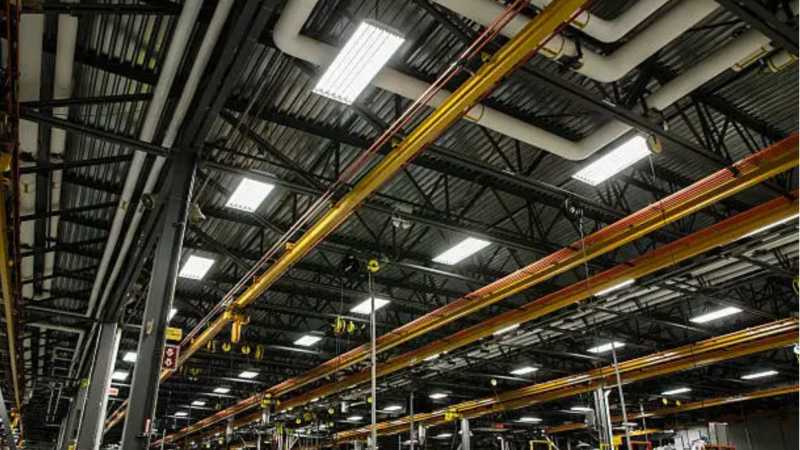
Commercial facility operators and property developers face mounting fiscal pressures from volatile power markets and aggressive carbon neutrality mandates. Managing operating margins requires identifying capital improvements that deliver immediate, measurable thermodynamic and fiscal efficiencies.
Illumination infrastructure is often categorized as routine facility overhead. However, treating commercial lighting as a passive utility overlooks substantial financial waste. Modernizing facility luminaires delivers a predictable capital return through reduced grid demand, operational resilience, and automated controls.
Why Legacy Lighting is Draining Commercial Budgets
Legacy High-Pressure Sodium (HPS) and Metal Halide (MH) systems continue to silently erode commercial operating margins. Beyond their high nominal wattage, these discharge luminaires carry significant thermodynamic and electrical penalties that directly inflate operational expenditure (OpEx).
A major factor in this budget drain stems from magnetic ballast power losses. Traditional ballasts consume an auxiliary 15% to 25% above nominal lamp wattage simply to regulate electrical arc discharge. This parasitic draw produces excessive ambient heat rather than usable photometric output.
The operational liabilities of legacy illumination include:
- Compounding Peak Demand Charges: Inductive ballast startup draws massive inrush current spikes. These surges trigger elevated peak demand billing rates that persist on monthly commercial utility invoices.
- Rapid Lumen Depreciation (L70 Premature Degradation): Metal halide systems routinely forfeit 30% to 50% of their initial luminous output within the first 5,000 operational hours, burning full line power while delivering sub-optimal lux levels.
- Unscheduled Maintenance Downtime: HPS and MH lamps feature rated lifespans of only 10,000 to 15,000 hours. Replacing failed units requires specialized boom lifts, licensed electricians, and disruptive floor closures across active warehouse or factory zones.
- Secondary HVAC System Overheads: High-intensity discharge lamps operate at surface temperatures exceeding 250°C. This constant thermal emission forces facility HVAC chillers to consume extra electricity to counteract internal thermal loads.
Engineering Standards for Modern Facility Illumination
Transitioning away from discharge fixtures requires strict adherence to solid-state engineering fundamentals. Luminaire selection must focus on hardware endurance, enclosure integrity, and semiconductor thermal dissipation rather than basic nominal wattage claims.
Thermal Management and Hardware Durability
When evaluating infrastructure upgrades, facility managers must look beyond basic wattage and focus on hardware endurance. Modern engineering standards dictate that effective thermal management is essential for preventing diode degradation and operational downtime. As technical data from WOSEN indicates, utilizing high-purity ADC12 aluminum and 18μm copper thickness substrates ensures optimal heat dissipation, which directly translates to sustained optical performance and reduced maintenance overhead in extreme commercial environments.
Excessive junction temperature remains the primary failure mechanism of high-power semiconductor diodes. When junction heat exceeds critical thresholds, phosphor layers degrade prematurely, triggering irreversible color shift and rapid lumen depreciation.
Industrial-grade solid-state hardware mitigates thermal stress through specialized mechanical design:
- ADC12 Die-Cast Aluminum Enclosures: High-purity die-cast aluminum alloys deliver thermal conductivity ratings near 96 W/m·K. Engineered vertical fins leverage natural ambient convection to channel heat away from sensitive LED chips.
- Heavy-Copper Metal Core Printed Circuit Boards (MCPCB): Substrates engineered with 18μm copper cladding and ultra-thin dielectric layers minimize thermal impedance between the LED emitter pad and the heat sink.
- Isolated Driver Compartments: Housing electronic constant-current power drivers in dedicated, thermally decoupled compartments prevents luminaire heat from compromising electrolytic smoothing capacitors.
- Surge and Transient Suppression: Industrial drivers require integrated 6kV to 10kV surge protection circuits to withstand high-energy voltage spikes common in industrial distribution grids.
Optical Clarity in Extreme Environments
Commercial operations frequently expose lighting fixtures to rigorous atmospheric challenges. Logistics bays, chemical processing floors, and coastal distribution centers demand luminaires capable of resisting continuous environmental degradation.
Airborne particulates, chemical vapor accumulation, and moisture can infiltrate poorly sealed luminaires. This contamination clouds protective lenses, shorts internal drivers, and induces galvanic corrosion across internal electronics.
Modern harsh-environment engineering mandates the following baseline specifications:
- Ingress Protection (IP65/IP66) Sealing: Continuous robotic-applied silicone perimeter gaskets isolate internal optical engines and electrical chambers from high-pressure water jets, airborne dust, and industrial washdown chemicals.
- Corrosion-Resistant Powder Coating: Luminaire housings must pass rigorous 1,000-hour ASTM B117 salt spray exposure tests. Multi-stage electrostatic powder coatings prevent oxidation and structural fatigue in coastal and high-humidity facilities.
- UV-Stabilized Optical Polycarbonate and Borosilicate Glass: Exterior lenses require high-transmittance, non-yellowing materials. UV stabilization ensures transmission efficiencies remain above 92% across a decade of continuous exposure.
- Mechanical Impact Resistance (IK08 to IK10): Industrial luminaires must endure severe kinetic shock from warehouse forklifts, material handling gantries, and automated storage and retrieval systems (ASRS).
The Tangible Financial Benefits of Smart Upgrades
Evaluating a comprehensive lighting overhaul requires analyzing the shift from initial Capital Expenditure (CapEx) to long-term Operational Expenditure (OpEx) savings. Advanced commercial retrofits consistently yield swift capital payback while freeing cash flow for core enterprise investments.
Replacing inefficient 400W metal halide fixtures with precision-engineered 120W to 150W industrial solid-state fixtures yields an immediate 65% to 72% reduction in connected lighting load. These direct energy savings are further amplified when paired with networked sensor arrays.
Key financial drivers governing industrial lighting modernization include:
- Direct Energy Cost Reductions: Substantial load reductions lower ongoing baseline electricity bills across continuous multi-shift operations.
- Auxiliary Cooling Savings: Lower thermal emissions from solid-state fixtures reduce commercial HVAC refrigeration burdens. Every kilowatt of lighting power eliminated reduces facility chiller demand by roughly 0.28 to 0.33 cooling tons.
- Complete Elimination of Relamping Labor: Solid-state fixtures engineered for L70/B10 ratings surpassing 70,000 to 100,000 operating hours effectively eliminate routine re-lamping budgets and hazardous high-reach lift rentals for over a decade.
- Intelligent Networked Control Savings: Integrating 0-10V or DALI-2 continuous dimming, daylight harvesting sensors, and automated occupancy schedules curtails unnecessary burn hours, yielding an extra 20% to 35% in energy conservation.
- Utility Tariff and Demand Incentives: Regulated power utilities offer lucrative prescriptive and custom cash rebates for DLC Premium (DesignLights Consortium) qualified solid-state equipment, offsetting up to 25% to 40% of upfront project CapEx.
Under typical multi-shift commercial operating profiles (16 to 24 operational hours daily), the net payback horizon typically ranges between 14 and 22 months. Over a 10-year facility operating cycle, the Internal Rate of Return (IRR) on high-efficiency luminaire retrofits routinely exceeds 35%.
Navigating Global Sustainability Standards in 2026
Corporate governance in 2026 demands transparent decarbonization methodologies and auditable energy data. Heightened ESG (Environmental, Social, and Governance) disclosure standards, such as the EU Corporate Sustainability Due Diligence Directive (CSDDD) and revised international energy conservation codes, place aging electrical infrastructure directly under compliance scrutiny.
Replacing legacy discharge lighting offers facility directors one of the fastest, non-disruptive pathways toward meeting mandatory Scope 2 greenhouse gas reduction targets. Solid-state upgrades convert directly into measurable kilowatt-hour drops, providing indisputable compliance verification for annual corporate reporting.
Beyond operational savings, corporate sustainability goals are driving the massive shift toward energy-efficient infrastructure. Upgrading legacy systems is one of the most immediate and measurable methods to align with modern ESG requirements. According to the U.S. Department of Energy, widespread adoption of commercial LED technologies has the potential to drastically reduce a facility’s carbon footprint while saving billions in energy costs annually across the commercial sector.
Achieving credible, legally defensible ESG reporting requires deploying hardware validated by globally recognized testing and certification bodies:
- Global Safety and Compliance Certifications: Luminaires must carry authentic UL/cUL (Underwriters Laboratories), TÜV Rheinland, and ENEC (European Norms Electrical Certification) marks to verify dielectric isolation, structural safety, and fire-resistant construction.
- Photobiological Safety Validation (IEC 62471): Testing ensures optical emissions do not pose blue-light optical hazards to plant technicians and shift personnel during prolonged exposure.
- Electromagnetic Compatibility (EMC / FCC Part 15 Class A): Certified high-frequency drivers prevent harmonic distortion and radio frequency interference with industrial automation networks, telemetry, and sensitive robotics.
- Green Building Rating Contributions: High-efficacy luminaires deliver vital credits toward prestigious real estate certifications, including LEED v4.1/v5, BREEAM, and the WELL Building Standard, boosting overall asset valuations.
Key Takeaways
| Area | Key Takeaway | Impact/Data |
| Energy Cost | Cut lighting power | 65-72% load drop |
| HVAC OpEx | Drop thermal output | Saves 0.3 tons/kW |
| Maintenance | End manual relamping | Lasts >70k hours |
| Financials | Claim utility rebate | 14-22 mo payback |
| Compliance | Meet Scope 2 targets | Earn LEED credits |
Conclusion: Future-Proofing Commercial Infrastructure
Relying on legacy illumination systems represents an ongoing, hidden drain on corporate profitability and an operational vulnerability in modern commerce. High-Pressure Sodium and Metal Halide technologies impose compounding costs through magnetic losses, severe lumen depreciation, and hazardous maintenance cycles.
Transitioning to advanced solid-state lighting infrastructure solves these operational challenges through precision thermal dissipation, certified optical enclosures, and exceptional energy efficiency.
By prioritizing robust engineering standards and internationally certified hardware, facility executives can permanently reduce operating overhead, safeguard balance sheets against power volatility, and establish an unshakeable foundation for corporate sustainability.