
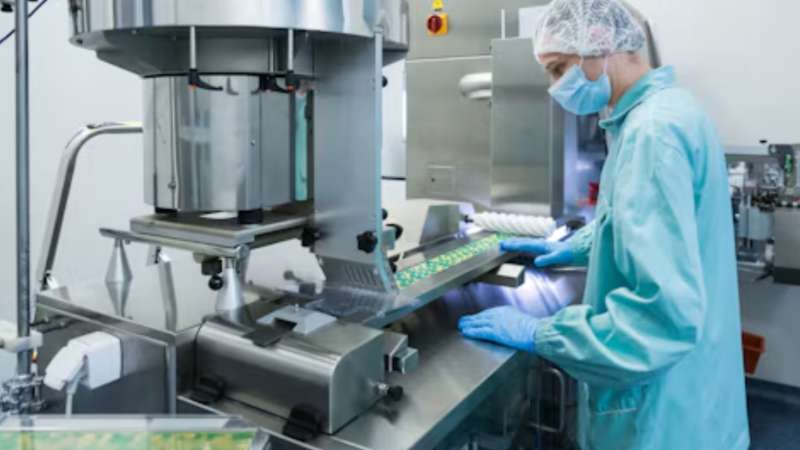
Within the life sciences and medical device manufacturing industries, packaging integrity is not merely a logistical consideration—it is a critical parameter of patient safety. Terminally sterilized medical devices, ranging from bio-absorbable vascular stents to orthopaedic surgical kits, rely entirely on their sterile barrier system (SBS) to maintain an absolute microbiological defense from the cleanroom sealing line to the sterile field of the operating theater.
A single compromised seal, whether manifested as a microscopic seal breach or substrate delamination, exposes vulnerable surgical devices to ambient bio-burden, rendering the product unsterile and non-compliant. While clinical packaging specifications are primarily dictated by sterile presentation requirements, achieving consistent seal hermeticity across hundreds of thousands of cycles remains a mechanical engineering challenge. Automated converting platforms engineered by KETE reflect this necessity, utilizing independent temperature zones and digital servo-driven transverse heat-sealing bars to eliminate micro-channel formation across laminated barrier pouches, thereby ensuring clean peel characteristics without film fraying during point-of-use deployment.
The Critical Function of Sterile Barrier Packaging in Medical Devices
Sterile barrier packaging serves two fundamental mandates: allowing effective sterilant ingress and evacuation while establishing an impenetrable tortuous barrier against environmental microorganisms throughout dynamic transit.
Defining Sterility Maintenance from Factory to Point of Care
Medical packaging must endure extreme physicochemical stresses imposed by terminal sterilization protocols without sacrificing mechanical seal strength:
- Ethylene Oxide (EO) Sterilization: Demands breathable substrates that permit rapid gas penetration, humidity equilibrium, and safe post-sterilization aeration to clear residual ethylene chlorohydrin.
- Radiation Modalities (Gamma and E-Beam): Subject polymer chains to free-radical degradation. Barrier films must withstand molecular cross-linking or chain scission without embrittlement or seal peel decay.
- Aseptic Presentation: During surgical deployment, circulating nurses must peel the pouch open without generating particulate shedding or fiber tearing that could drop into the sterile surgical field.
Meeting these conditions requires breathable medical-grade spunbound flash-spun polyethylene sheets heat-sealed to high-barrier co-extruded films.
Common Seal Failure Modes: Micro-Channels and Delamination
Mechanical failures in flexible medical pouches rarely stem from raw material punctures; they predominantly originate at the heat-seal interface:
- Micro-Channel Formation: Microscopic capillary tunnels measuring under 10 microns can develop across transverse heat seals due to localized pressure drop-offs or particulates trapped in the seal zone. These micro-voids permit microbial ingress while passing gross visual inspection.
- Polymer Delamination: Occurs when thermal gradients between the upper and lower heated platens cause unequal thermal contraction during cooling, resulting in layer separation within multi-layer laminates.
- Film Embrittlement and Fraying: Over-exposure to excessive sealing temperatures degrades the sealant layer polymer chains, resulting in ragged, fiber-shedding peels during aseptic presentation.
Machinery Requirements for Converting Medical Pouch Substrates
Transforming technical medical substrates into sterile barrier pouches demands specialized converting platforms that deliver exact, repeatable thermodynamics.
Dynamic Control of the Sealing Triangle: Time, Temperature, and Pressure
Consistent seal hermeticity is governed by the absolute stability of the sealing triangle:
- Sub-Millisecond Dwell Time Precision: High-speed pouch-making machines utilize digital electronic servos to regulate platen contact duration, eliminating mechanical dwell variances inherent in pneumatic linkages.
- Closed-Loop PID Temperature Regulation: Heated sealing bars must maintain cross-platen temperature uniformity within. Advanced machinery utilizes multi-zone cartridge heaters paired with high-frequency RTD thermocouple sensors to prevent localized thermal sagging during continuous runs.
- Proportional Pneumatic Pressure: Uniform hydraulic or electronic servo-driven clamping systems distribute clamping forces evenly across the transverse seal width, eliminating pressure gradients that generate edge thinning.
Converting Co-Extruded Multi-Layer and Tyvek Materials
Converting complex dissimilar substrates introduces pronounced thermodynamic mismatches:
- Melting Point Disparity: Spunbound Tyvek® softens at approximately 135°C, while opposing laminated films (such as PET/AL/CPP or PA/PE) exhibit melting transitions spanning from 105°C (sealant resin) to over 250°C (outer polyester carrier).
- Step-Heated Thermal Profiles: Converting equipment integrates progressive heating stations that pre-condition the web before delivering the final sealing pulse, followed by immediate active chilling jaws.
- Cold-Jaws Quenching: Water-cooled quenching platens freeze the molten sealant matrix under pressure, locking in polymer crystallinity, preventing internal package stress, and ensuring a visually transparent, uniform seal border.
Verification and Operational Process Validation
Medical device packaging equipment must undergo rigorous, documented equipment and process validation protocols prior to commercial cleanroom deployment.
Designing Sealing Process Windows for Cleanroom Production
Process engineers establish validated operating envelopes through sequential qualification phases:
- Installation Qualification (IQ): Confirms that mechanical assemblies, pneumatic sensors, emergency interlocks, and digital calibrations align with factory engineering specifications.
- Operational Qualification (OQ): Establishes the upper and lower operational boundaries (Worst Case Testing). Engineers subject seal runs to extremes of temperature, dwell, and pressure to verify that seal peel strength conforms to ASTM F88 thresholds (typically requiring consistent peel forces between 1.5 N/15 mm and 3.0 N/15 mm without film delamination).
- Performance Qualification (PQ): Validates long-term process capability across commercial shift changes, material lot variations, and routine line stoppages.
Key Takeaways
| Area | Key Takeaway | Impact/Data |
| Compliance | Enforce ISO 11607 and MDR standards | Avoids unsterile product recalls and fines |
| Machinery | Deploy digital servo multi-zone sealing | Eliminates micro-channels under 10 microns |
| Validation | Execute strict IQ/OQ/PQ protocol testing | Meets ASTM F88 peel strength 1.5–3.0 N/15mm |
International Regulatory Frameworks for Medical Packaging Integrity
Compliance in medical device converting is governed by stringent international quality frameworks designed to ensure repeatable barrier integrity.
ISO 11607 Compliance and FDA Pre-Market Audits
Medical device manufacturers are strictly mandated to prove that their terminally sterilized barrier systems withstand aging and transit stress in accordance with ISO standard 11607 specifications. These protocols govern the validation of forming, sealing, and assembly processes to guarantee that the sterile state is maintained up to the exact point of surgical opening.
Global regulatory authorities, including the US FDA and European Notified Bodies under MDR 2017/745, demand rigorous physical validation datasets:
- Dye Penetration Testing (ASTM F1929): Assesses the presence of capillary micro-channels across the sterile barrier perimeter using surfactant dyes.
- Bubble Emission Testing (ASTM F2096): Verifies gross hermeticity by submerging pressurized packages into liquid test chambers to detect internal seal fissures.
- Accelerated and Real-Time Aging: Packaging systems undergo accelerated environmental aging regimens (ASTM F1980) simulating up to five years of shelf life to prove that seal peel resistance and barrier performance do not decay over time.