
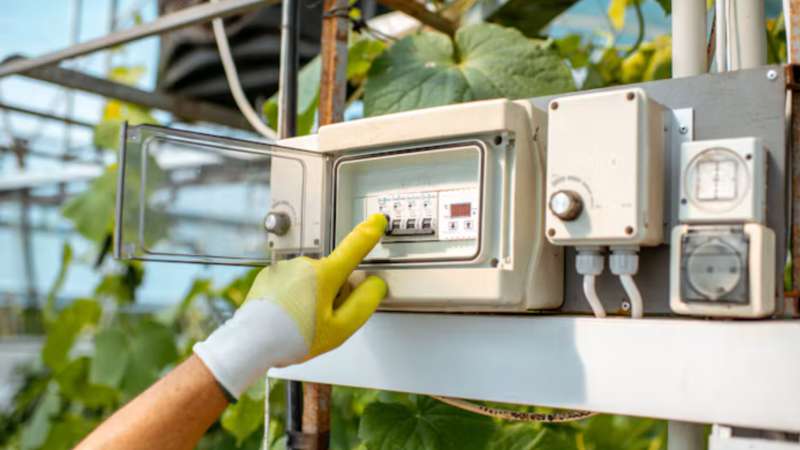
Modern life sciences laboratories and biomedical cleanrooms house delicate analytical instrumentation. Ultra-low temperature (ULT) freezers, high-resolution mass spectrometers, liquid chromatography systems, and automated PCR thermal cyclers form the backbone of modern drug discovery and genomic analysis. According to power quality research published by the IEEE, internal building operations generate up to 80% of all electrical transient disturbances within commercial and high-tech facilities.
In biopharmaceutical environments, massive rooftop HVAC chillers, cleanroom air handlers, and multi-stage refrigeration compressors cycle continuously. This constant inductive switching injects high-frequency micro-surges directly into internal branch circuits. External grid switching and distant indirect lightning strikes compound these power fluctuations.
While catastrophic voltage spikes trip primary circuit breakers, low-amplitude transient voltages operate beneath traditional overcurrent thresholds. These sub-microsecond transients repeatedly stress delicate solid-state components, causing:
- Microprocessor logic errors and unexplained firmware lockups.
- Premature degradation of sensitive analog-to-digital converter (ADC) boards.
- Sensor drift and calibration loss in high-precision spectroscopic detectors.
- Latent dielectric breakdown within internal power supply transformers.
The Cost of Power Instability: Biological Sample Integrity and Research Continuity
In life sciences infrastructure, the true cost of an electrical failure extends far beyond hardware replacement expenses. A single transient-induced power interruption to a bank of ULT freezers or liquid nitrogen cryogenic storage units can jeopardize decades of irreplaceable longitudinal clinical trial specimens, proprietary cell lines, and delicate enzyme reagents.
Furthermore, unexpected instrument downtime disrupts ongoing continuous-flow chromatography and real-time kinetic assays, rendering entire experimental batches invalid. Such disruptions directly compromise regulatory compliance under Current Good Manufacturing Practice (cGMP) and Good Laboratory Practice (GLP) frameworks. Ensuring robust power quality is therefore a fundamental mandate for risk mitigation, audit readiness, and continuous scientific validation.
Engineering Standards for Laboratory Surge Protective Devices (SPDs)
Critical Hardware Components: Heavy-Duty MOVs and Thermal Isolation
Securing sensitive scientific instrumentation against recurring voltage transients requires specifying protective devices with proven thermal durability and sub-nanosecond clamping capabilities. Specialized modular hardware, such as the DIN-rail solutions manufactured by LSP, utilizes high-energy Metal Oxide Varistors (MOVs) paired with internal arc-shielded thermal disconnect mechanisms to divert transient currents safely before they penetrate sensitive lab circuitry.
At the core of an industrial-grade SPD, a sintered zinc-oxide MOV acts as an ultrafast voltage-clamping semiconductor. Under standard nominal AC line voltages, the MOV maintains a high internal impedance, drawing negligible leakage current. When a transient overvoltage exceeds its threshold, the MOV transitions to a highly conductive state within nanoseconds, shunting high impulse currents safely into the facility grounding bus.
Because continuous exposure to high-energy surges incrementally increases MOV leakage currents, thermal management is paramount in cleanrooms and biosafety facilities. Advanced laboratory-grade SPDs feature:
- Micro-Thermal Disconnect Switches: Spring-loaded solder barriers that physically isolate failing MOV discs before thermal runaway occurs.
- Integrated Arc-Extinguishing Baffles: Specialized chambers that quench electrical arcs during high-energy separation events.
- Flame-Retardant Thermoplastic Enclosures: UL 94 V-0 rated modular housings that prevent smoke emission and combustion hazards in controlled cleanroom environments.
- Visual and Remote Telemetry Contacts: Dry-contact signaling terminals that alert Building Management Systems (BMS) the instant an individual protection cartridge requires replacement.
Residual Clamping Voltage and Fast Response Times for Precision Analytics
For precision analytical benches, clamping speed alone does not guarantee absolute safety; the residual voltage protection level is equally critical. Sensitive digital signal processors and low-noise operational amplifiers operate on low-voltage DC rails derived from internal switched-mode power supplies.
If an upstream SPD exhibits a high residual let-through voltage, a portion of the surge energy can pass through DC power converters. This remaining energy induces high-frequency common-mode noise, corrupting RS-485, CAN bus, and Ethernet telemetry interfaces between lab automation robots and analytical controllers. Precision SPDs suppress residual let-through voltages to safe levels, ensuring noise-free power delivery across critical instrument racks.
Designing a Multi-Tiered Cascaded SPD Network for Biotech Facilities
Comprehensive electrical protection across life sciences infrastructure requires an engineered, multi-tiered cascaded network based on the Lightning Protection Zones (LPZ) concept. This topology progressively attenuates transient surge energy from the utility entrance down to the benchtop.
Tier 1 (Type 1): Building Entry & Heavy Power Ingress Mitigation
- Installation Point: Main Low-Voltage Switchboard (MLVS) and facility service entrance.
- Engineering Mandate: Primary defense against direct and indirect lightning impulse currents entering via external utility lines, tested under the severe waveform.
- Performance Benchmark: Type 1 SPDs must feature massive impulse current withstand capacities using robust spark gaps or heavy-duty encapsulated varistor blocks.
Tier 2 & Tier 3 (Type 2 & Type 3): Cleanroom Distribution Panels and Benchtop Point-of-Use
- Tier 2 (Type 2) Sub-Panel Protection: Installed at secondary distribution panels supplying cleanroom suites, air handling motor control centers, and HVAC chiller sub-boards. Tested against the standard surge waveform, these units clamp switching surges generated by heavy inductive motors and compressors.
- Tier 3 (Type 3) Point-of-Use Protection: Installed on localized DIN rails inside instrument control panels or dedicated laboratory benchtop socket boxes. Type 3 units suppress residual voltage spikes, providing low let-through voltages directly at the power inlets of mass spectrometers, liquid chromatographs, and biosafety cabinets.
Key Takeaways
| Area | Key Takeaway | Impact/Data |
| Threat Origin | Mitigate internal equipment transients | 80% generated by internal HVAC/chillers |
| Research Risk | Shield ULT freezers and analyzers | Prevents lost trials & cGMP/GLP violations |
| Safety Tech | Mandate thermal disconnects & baffles | Prevents thermal runaway & cleanroom fires |
| Architecture | Deploy 3-tier cascaded LPZ layout | Protects from MLVS down to benchtop DC |
| Compliance | Require IEC 61643 certified hardware | Guarantees multi-impulse & SCCR ratings |
Compliance Protocols and International Standards for Critical Electrical Systems
Adhering to IEC 61643 and Global Quality Frameworks
To guarantee that surge suppression hardware can withstand severe operational stress without compromising downstream analytical tools, facility planners must reference globally validated testing procedures. Under the testing protocols codified in IEC 61643 by the International Electrotechnical Commission, low-voltage surge protective devices must prove their defined voltage protection level and impulse withstand under standardized simulated waveform conditions.
Compliance with the IEC 61643 series requires rigorous type testing to verify specific electrical parameters:
- Nominal Discharge Current: Verifies the SPD’s ability to survive at least 15 repetitive current impulses without operational degradation.
- Maximum Discharge Current: Establishes the ultimate single-event discharge ceiling an SPD can conduct without physical rupture.
- Continuous Operating Voltage: Validates the maximum continuous voltage an SPD can endure without continuous conduction or premature aging.
- Short-Circuit Current Rating (SCCR): Guarantees the device can safely clear high prospective fault currents without creating an explosive arc flash in the distribution enclosure.
By specifying hardware certified under recognized international testing frameworks, biomedical engineering teams safeguard mission-critical research instruments, maintain sample integrity, and ensure complete compliance with global life sciences quality standards.