
Global automotive supply chains face mounting regulatory pressures to eliminate carbon footprints without sacrificing mechanical integrity. Frameworks such as the EU End-of-Life Vehicles (ELV) Directive, Corporate Average Fuel Economy (CAFE) updates, and Scope 3 reporting mandates compel Tier-1 and Tier-2 manufacturers to reassess raw material inventories.
Engineering teams navigate a difficult trilemma: lowering embodied carbon while upholding high-cycle mechanical endurance, chemical resilience, and rigid assembly tolerances. While bio-based polymers, natural fiber-reinforced composites (NFRPs), and secondary alloys offer emissions reductions, their non-linear mechanical profiles challenge traditional machining and stamping operations.
Replacing long-standing metallurgical baselines demands strict verification across both Original Equipment Manufacturer (OEM) specifications and independent aftermarket replacement standards. Integrating sustainable alternatives requires a deep understanding of microstructural behavior, tribological shifts under renewable operating fluids, and strict dimensional control.
Material Evolution: The Shift from Pure Alloys to Sustainable Composites & Bio-Polymers
Transitioning from primary aerospace-grade wrought alloys and virgin petrochemical resins to circular alternatives represents a fundamental shift in automotive design. Automotive engineers are qualifying bio-polyamides, flax- and hemp-reinforced thermoplastics, and secondary cast aluminum alloys for applications previously reserved for virgin metals.
Structural Integrity vs. Weight Reduction in Under-the-Hood Applications
Under-the-hood engine and powertrain compartments represent challenging operating environments. Components regularly withstand continuous operational thermal envelopes spanning -40°C to 150°C, intermittent peak spikes reaching 180°C, and persistent multi-axial harmonic vibrations.
Transitioning structural bracketry, air intake manifolds, and sensor covers from petroleum-derived Polyamide 66 (PA66-GF30) to bio-based polyamides (PA410, PA1010) or hybrid natural-fiber composites requires rigorous mechanical verification:
- Creep Compliance & Tensile Modulus: Structural bio-polyamides must maintain a tensile modulus between 8,500 MPa and 11,000 MPa (per ISO 527-2) under sustained thermal stress to prevent cyclic deflection under load.
- Heat Deflection Temperature (HDT): Functional under-the-hood matrices mandate an HDT (at 1.80 MPa, ISO 75-2) exceeding 200°C to prevent localized plastic deformation near turbochargers and exhaust paths.
- High-Cycle Fatigue Endurance: Structural components exposed to high-frequency engine excitation (20 Hz to 2,000 Hz) must demonstrate fatigue thresholds above 75 MPa at 10^7 cycles (tested under ASTM D7774).
- Hygroscopic Volumetric Stability: Bio-resins typically feature higher moisture absorption; water uptake must remain strictly below 1.2% by weight to prevent linear thermal expansion from exceeding ±0.05 mm.
Thermal Resistance and Mechanical Tolerances in Aftermarket Parts
Unlike virgin billets, secondary cast aluminum (such as A380 or A356.0) and bio-composite compounds exhibit anisotropic shrinkage and non-uniform thermal contraction during solidification and curing cycles. This poses significant challenges for aftermarket components that must match original factory dimensional envelopes.
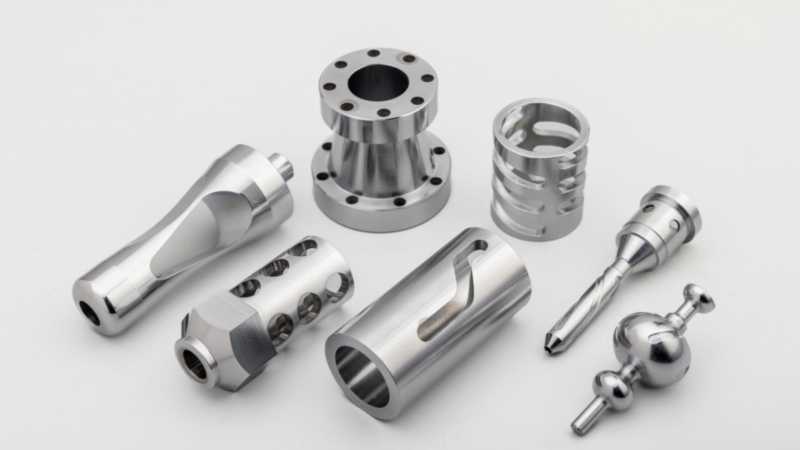
To meet stringent environmental mandates without sacrificing mechanical fatigue thresholds, tier suppliers and precision machine shops must maintain micron-level machining tolerances. As demonstrated in technical fabrication guidelines from precision automotive parts suppliers like Sunway Autoparts, integrating high-strength alloys and fatigue-resistant components into engine and chassis assemblies requires calibrated CNC tooling and multi-stage thermal stress testing to prevent micro-fracturing under high-vibration load cycles.
Achieving factory-spec interchangeability demands continuous control over thermal expansion and geometric tolerances:
- Coefficient of Linear Thermal Expansion (CLTE): Matching component CLTE within 18 × 10^-6 /K to 23 × 10^-6 /K prevents interface shearing when mating recycled aluminum parts with cast-iron liners or steel fasteners.
- GD&T Class Conformance: Precision aftermarket housings, bushings, and pump carriers require strict adherence to ISO IT6 to IT7 tolerance bands, enforcing true position constraints under 0.015 mm.
- Pre-Machining Stress Relief: Multi-stage artificial aging (T6 heat treatment) is necessary for recycled castings to homogenize internal residual stresses prior to high-speed 5-axis CNC finishing.
Tribology and Chemical Compatibility with Bio-Based Fluids
Decarbonization extends beyond lightweight structural materials to the chemical operating fluids coursing through modern powertrains. Renewable drop-in fuels, bio-diesel (FAME and HVO), high-percentage ethanol blends (E85), and low-viscosity synthetic biolubricants introduce aggressive chemical environments that degrade traditional automotive sealing and sliding interfaces.
Elastomer and Gasket Degradation Under Bio-Fuel Blends (E85/Biodiesel)
Bio-derived alternative fuels act as potent polar solvents when brought into direct contact with conventional elastomeric fuel system components. Engineering durable sealing requires reformulating rubber matrices to resist physical degradation:
- Plasticizer Extraction: Low-molecular-weight phthalate plasticizers in standard Nitrile Butadiene Rubber (NBR) leach rapidly in the presence of anhydrous ethanol, precipitating polymer matrix embrittlement and causing up to 45% loss in tensile strength.
- Volumetric Swelling & Softening: High-concentration biodiesel blends (B20 to B100) penetrate non-polar elastomer networks, inducing volumetric swelling exceeding +25% and reducing material hardness by 15 to 20 Shore A.
- Transition to High-Fluorine Elastomers: Fuel delivery and rail assemblies must adopt peroxide-cured fluoroelastomers (FKM / FFKM) with 66% to 70% fluorine content (conforming to SAE J200 / ASTM D2000), limiting volumetric swell below +5%.
- Multi-Layer Barrier Liners: Fuel transfer tubing requires co-extruded inner barrier walls composed of polyphthalamide (PPA) or fluoropolymers to hold hydrocarbon permeation below 0.5 g/m²/day pursuant to EPA/CARB LEV III mandates.
Surface Engineering and Anti-Wear Coatings
Formulating bio-lubricants with plant-based synthetic esters produces lower fluid viscosities (e.g., 0W-8 and 0W-12 grades). However, ester-based polar molecules compete directly against traditional zinc dialkyldithiophosphate (ZDDP) anti-wear chemistries on metal surfaces, demanding specialized surface coatings:
- Diamond-Like Carbon (DLC) PVD Coatings: Depositing hydrogenated amorphous carbon (a-C:H) or tetrahedral amorphous carbon (ta-C) lowers dry sliding friction down to μ = 0.04, eliminating micro-scuffing on valvetrain followers and piston wrist pins.
- Plasma Electrolytic Oxidation (PEO/MAO): Treating secondary aluminum and cast magnesium housings with micro-arc oxidation grows a dense, metallurgical alpha-alumina (α-Al2O3) layer providing surface hardness between 1,400 HV and 1,800 HV to resist bio-acidic corrosion.
- Superfinished Roughness Limits: Dynamic journal surfaces running against low-viscosity bio-fluids require automated micro-polishing down to Ra ≤ 0.05 μm and Rz ≤ 0.4 μm to sustain full hydrodynamic fluid film separation under high hydrodynamic loads.
Supply Chain Circularity: Remanufacturing and Precision Machining
True supply chain circularity requires transitioning from open-loop downcycling to high-value remanufacturing and direct closed-loop alloy recycling. Converting scrap into structural-grade automotive components presents distinct metallurgical and machining challenges.
Secondary Alloy Metallurgy and Microstructural Homogeneity
Scrap streams of post-consumer cast aluminum introduce elevated levels of tramp elements, particularly iron, silicon, and copper, altering the alloy’s crystalline microstructure:
- Intermetallic Phase Morphology: Excessive iron content results in brittle beta-phase (β-Al5FeSi) intermetallic needles that act as internal notch points, decreasing ultimate elongation from >7% down to <2.5%.
- Strontium Inoculation: Adding controlled master alloys containing 0.015% to 0.025% Strontium (Sr) modifies acicular intermetallics into fine, fibrous eutectic structures, restoring dynamic fracture toughness.
- Accelerated Cutting Tool Wear: Hard micro-inclusions in secondary ingots accelerate flank wear on cutting tools; machining operations rely on Polycrystalline Diamond (PCD) or TiAlSiN-coated solid carbide inserts running at cutting speeds of Vc: 400–800 m/min.
- Degassing & Flux Filtration: Secondary melts mandate intensive rotary degassing with argon-chlorine mixtures to hold dissolved hydrogen below 0.12 cm³/100g Al, preventing internal microporosity during high-speed CNC drilling and boring.
Dimensional Verification in Sustainable Automotive Supply Chains
Because secondary alloys and bio-polymers present wider solidification and shrinkage windows, precision quality assurance requires automated dimensional verification:
- Automated Coordinate Measuring Machines (CMM): High-speed multi-sensor CMMs operating inside climate-controlled metrology suites (20°C ±0.5°C) confirm prismatic powertrain geometries, delivering point-to-point repeatability within MPE_E = ±(0.8 + L/400) μm.
- Non-Contact Blue Light Metrology: Structured-light 3D optical scanning captures millions of surface coordinates within seconds, generating surface deviation heatmaps that detect asymmetric warping or sink marks in complex composite housings.
- Statistical Process Control (SPC): Machining centers maintain a process capability index of Cpk ≥ 1.67 on critical-to-quality (CTQ) dimensions, verifying bilateral tolerance bands between ±0.005 mm and ±0.012 mm.
Key Takeaways
| Area | Key Takeaway | Impact/Data |
| Emissions | Substitute virgin alloys with secondary remelt | Cuts embodied carbon 85%–92% (<1.8 kg CO2e/kg) |
| Structural Resins | Qualify bio-polyamides against thermal creep | Mandates HDT >200°C; moisture uptake <1.2% |
| Seals & Gaskets | Replace NBR with high-fluorine elastomers | Limits swell to <5%; avoids 45% tensile loss |
| Machining | Neutralize iron inclusions via strontium inoculation | Recovers elongation from <2.5% to >7% |
| Wear Interfaces | Apply thin-film DLC/PEO surface coatings | Drops friction to μ = 0.04 under low-viscosity fluids |
| Tolerance / QA | Enforce automated CMM and optical scanning | Holds true position <0.015 mm (Cpk ≥ 1.67) |
Regulatory Frameworks, LCA Standards, and Future Trajectories
Vehicle sustainability mandates have progressed from tracking tailpipe emissions to quantifying full lifecycle footprints. Engineering organizations must account for emissions generated during raw material extraction, processing, component machining, and eventual end-of-life recycling.
Scope 3 Emissions and Scope of Automotive Life Cycle Assessment
Component-level sustainability cannot be evaluated in isolation from total operational lifecycle metrics. Automotive procurement frameworks increasingly benchmark material trade-offs against standardized life-cycle assessment methodology, tracking raw-material extraction, manufacturing energy intensity, and closed-loop recyclability to ensure verifiable emissions reductions.
- ISO 14040/14044 Compliance: Applying ISO-standardized cradle-to-gate and cradle-to-grave boundary parameters ensures that declared Scope 3 supply chain carbon reductions are third-party verifiable and audit-compliant.
- Digital Product Passports (DPP): Impending European industrial directives require supply chains to record verified recycled mass ratios, chemical inventories (REACH compliance), and carbon footprints per kilogram of delivered hardware.
- Embodied Carbon Impact: Transitioning from primary virgin smelter aluminum to high-fraction secondary remelt alloys reduces upstream material emissions by up to 85% to 92%, dropping embodied carbon from ~16.5 kg CO2e/kg to under 1.8 kg CO2e/kg.
By coupling bio-composites, recycled alloys, and alternative fluid-resistant elastomers with advanced CNC precision tooling and rigorous GD&T protocols, the precision automotive industry can build clean, carbon-neutral mobility architectures that deliver high operational reliability across original equipment and aftermarket channels.